

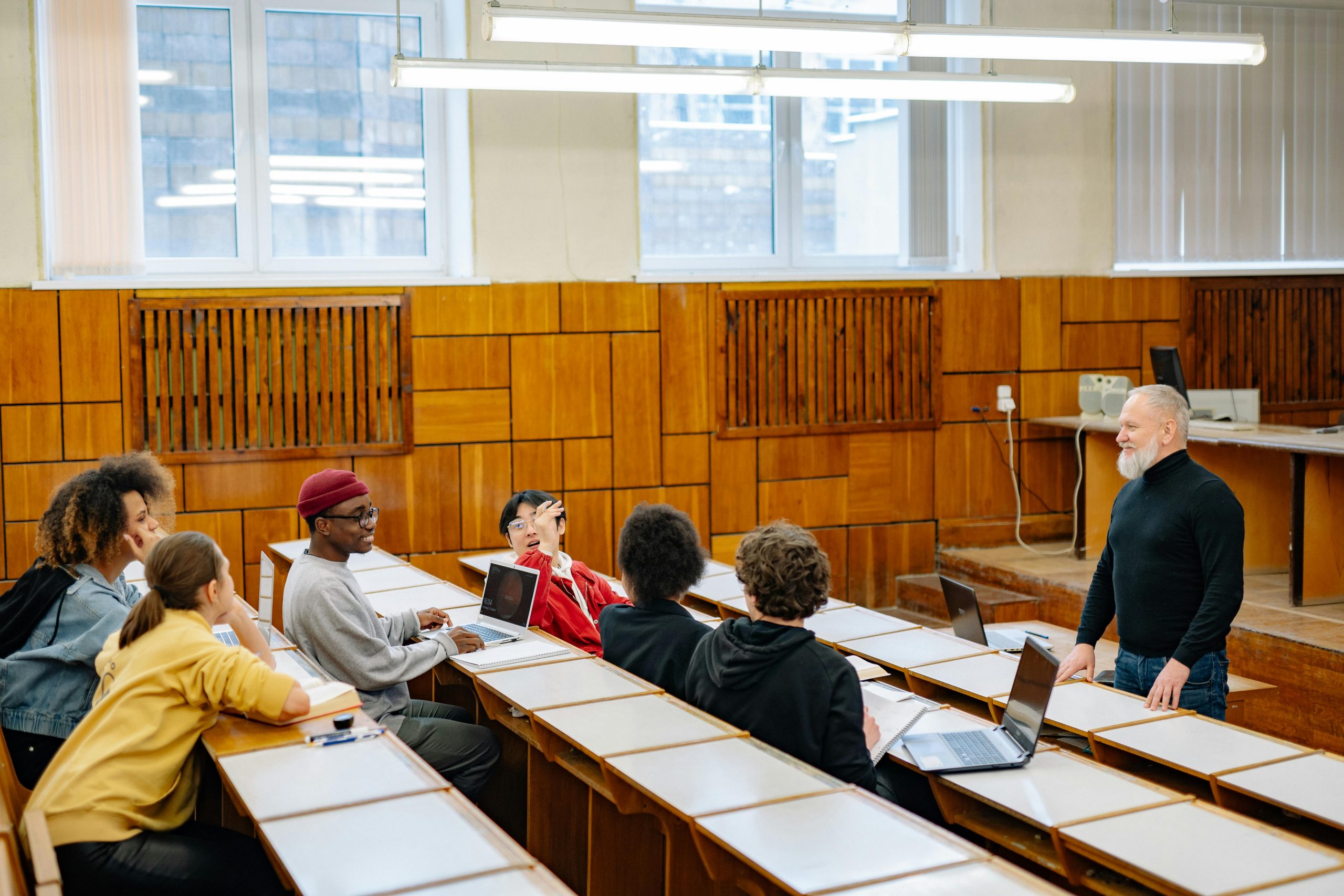
As students prepare to move on from their high school studies to higher education, they usually fixate on the academic workload they’re about to face. Some students and their families try their best to brace for the impact of this shift by enrolling their students in AP classes, IGCSEs, or university-level dual-enrollment courses during their final years. Most of these academic courses aim to help students set the right expectations for university. However, academic readiness is only part of today’s globally diverse higher education environments. What families and K-12 schools miss while preparing their students for higher education is the role of cultural integration and social belonging. These factors have been proven to impact student success and retention directly.
According to Tinto’s theory of dropout, students who succeed in higher education are the ones who integrate both academically and socially. His explanatory model follows the longitudinal process of students’ academic and social interactions upon arrival to higher education. For example, individual students enter higher education institutions with various personal attributes from their prior experiences and family background, which can directly or indirectly impact their academic performance and integration ability.
Cultural Integration is Social Integration
When we talk about cultural integration in higher education, it’s not just about various representations dress, clubs, or festive activities. True integration means that students feel their values, ways of communicating, and worldviews are acknowledged and respected in academic and social spaces.
According to Kerby (2015), institutions must emphasize a “sense of place” for students to ensure better retention. Kerby continues to draw upon classical social theory, like Tinto’s, arguing that students need to develop a sense of belonging and identify with the institution itself – not just fit in academically. Her model suggests that voluntary dropout decisions are influenced by internal factors (like institutional culture) and external ones (such as national educational climate or cultural expectations).
This matters even more in multicultural university contexts like the UAE, where students bring complex identities into learning spaces that may not always reflect or accommodate them.
What Can University Staff do?
If student retention is the goal, creating spaces where students feel socially and culturally connected must be a priority. This could include:
- Training faculty in intercultural competence.
- Embedding inclusive pedagogy into course design.
- Developing peer mentorship programs across cultural lines.
- Rethinking orientation programs to go beyond logistics and into identity, community, and belonging.
These actions don’t replace academic support—but they complete the picture.
Integrating Culture and Curriculum
As performance-based metrics and global rankings dominate higher education policy, institutions must be careful not to reduce retention to test scores and GPAs alone. Students succeed when they feel like they belong.
In the UAE and worldwide, universities prioritizing cultural integration and fostering genuine social belonging will improve retention and build inclusive campuses that reflect the diversity they recruit.
Looking to grow your team’s Intercultural Agility? Book a training today for your staff’s professional development.
References
Abani, R. L. (2024). Higher education readiness, EFL learners, and student retention in the UAE.
Kerby, M. B. (2015). Toward a new predictive model of student retention in higher education: An application of classical sociological theory. Journal of College Student Retention: Research, Theory & Practice, 0(0), 1–24. https://doi.org/10.1177/1521025115578229
Tinto, V. (1975). Dropout from higher education: A theoretical synthesis of recent research. Review of Educational Research, 45(1), 89–125. https://doi.org/10.3102/00346543045001089